Last year, Pride Foundation Australia ran one of our largest grant rounds to date, advertising a funding pool of $100,000 towards projects that are building and supporting LGBTQIA+ inclusive rural and regional health services and their partnerships to organisations with significant expertise in LGBTQIA+ health and inclusion.
With so many impressive submissions, the committee decided to move forward with funding seven projects and increasing the total funding amount to $114,811.25.
In no particular order, please join us in congratulating the recipients of this grant funding, and read about how these projects will work to improve access to inclusive health services in rural and regional Australia.

Gentle Sensory (VIC) – Supporting LGBTQIA+ neurodiverse young people
Gentle Sensory provides compassionate, neurodiversity-affirming support for children, adults, and their families. Their core mission is to empower, not to “fix.” Through a range of tailored services, including counselling, capacity building, and peer support, Gentle Sentory aims to support our clients in building the confidence and skills to navigate the world authentically and thrive entirely on their own terms.
Gentle Sensory received a grant of $20,000 to roll out their project across Macedon Ranges Shire, Warrnambool City Shire and Corangamite Shire. The Gentle Sensory’s Project aims to bridge the gap in accessibility, identity, and neuro-affirming services for young people. Key activities for this project include ensuring all staff are trained and confident in providing safe, inclusive and affirmative support, ensuring space is LGBTIQA+ and neurodiversity safe to move beyond mere compliance to proactive inclusion, and achieving a Rainbow Tick approval to embed LGBTQIA+ inclusion and safety into Gentle Sensory’s support, policies and services.
Gunditjmara Aboriginal Cooperative Ltd (VIC) – Enhancing the Health and Wellbeing of the LGBTQIA+ within Gunditjmara
Gunditjmara Aboriginal Cooperative Ltd is an independent community based not-for-profit Aboriginal Community Controlled Organisation that was founded by a group of volunteers from the local Aboriginal community of the Victorian South West region in 1979. From humble beginnings to long-term vision of their community has driven the organisation as the primary provider of social, health and cultural services in the region.
Gunditjmara is located in Warrnambool servicing Southwest Victoria. It provides services to local Government areas including Warrnambool City Council, Moyne, Southern Grampians, and Glenelg shires.
They received a $20,000 grant towards their project that aims to achieve Rainbow Tick Accreditation, demonstrating Gunditjmara Aboriginal Cooperative’s commitment to a safe, inclusive, and affirming environment for LGBTQIA+ staff, clients, and community members. The accreditation process will help the organisation to assess, improve, and embed inclusive practices across all areas of their work.

Bendigo & District Aboriginal Cooperative (VIC) – More Than A Tick
Founded in 2001, the Bendigo and District Aboriginal Co-operative (BDAC) is a proud Aboriginal Community Controlled Organisation (ACCO), delivering flexible, responsive, and culturally appropriate services to Aboriginal and/ or Torres Strait Islander residents on Dja Dja Wurrung Country (djandak) in central Victoria. Djandak spans from Bendigo to surrounding areas such as Castlemaine, Creswick and Daylesford in the south; Redesdale and Woodend to the east; Maryborough, St Arnaud and Donald to the west; and Boort and Rochester to the north.
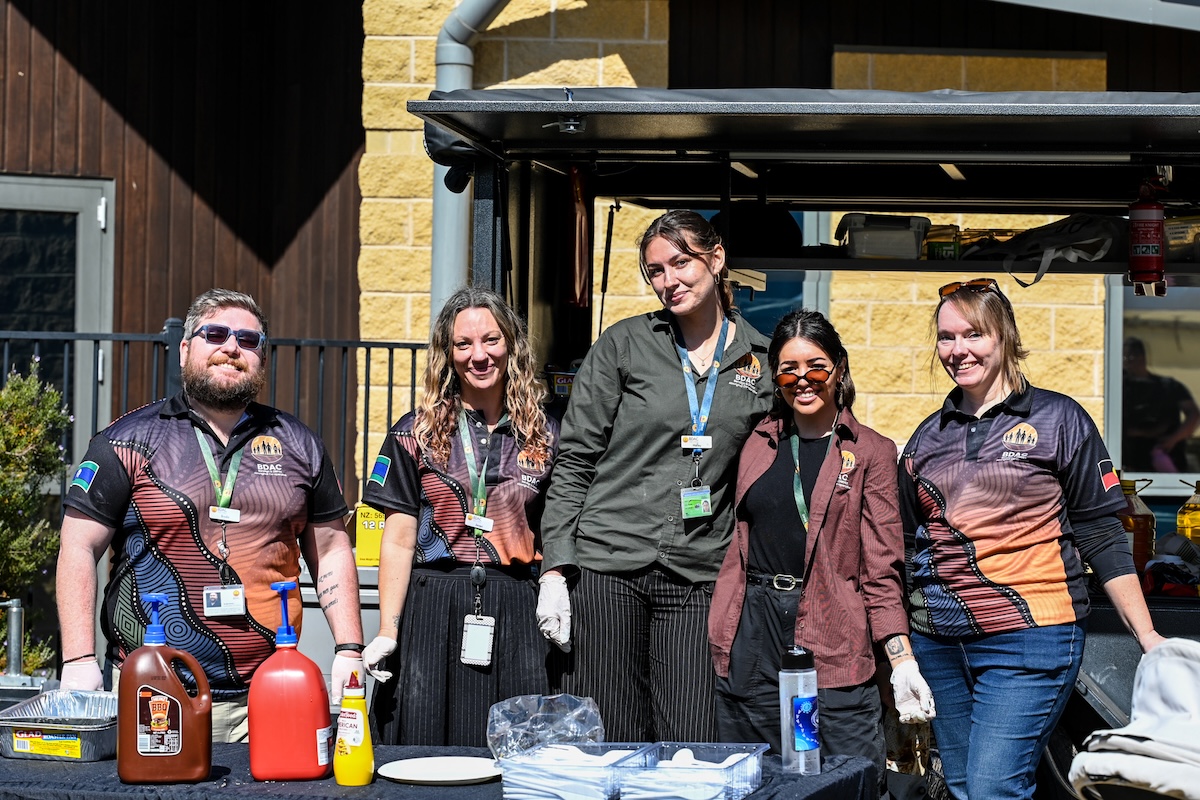
Awarded a $20,000 towards their project, BDAC will be using the funding to deliver essential staff training, in preparation for BDAC obtaining Rainbow Tick accreditation. Their initial priority is the delivery of Rainbow Mob awareness training to all staff, followed by specialised training for health professionals. Then, their EID project team will complete HOW2 change management training adapted for ACCOs through Rainbow Health Australia and adopt this methodology.
Sexual Health Quarters (WA) – The Starship Project: Navigating Allyship and Affirming Healthcare Pathways in Regional WA
Sexual Health Quarters (SHQ) is a sexual health clinic situated in Perth, Western Australia. SHQ offers a range of clinical services including testing and treatment of STIs, contraception information and supply, unintended pregnancy support, medical abortion and cervical screening.
The Perth-based organisation received a $20,000 grant towards The Starship Project, a 12-month pilot building affirming healthcare pathways for heath care workers to support trans and gender diverse (TGD) people with disability in regional WA. Based in Albany, it strengthens the skills and confidence of healthcare workers to deliver inclusive, gender-affirming care for TGD clients with disability and neurodivergence – groups who often face compounded barriers to access. The project builds on SHQ’s newly established Gender Diversity Clinic and their long-standing work supporting clients with disability and complex care needs.
National Centre for Farmer Health (National) – Pride in the Paddock: Inclusive health, wellbeing and safety for all farmers
The National Centre for Farmer Health is dedicated to improving the health, wellbeing, and safety of farmers, farm workers, farming families and agriculture-dependent communities across Australia. Through health services, education and training, translational research and stakeholder engagement, we drive change and make a lasting impact.
Receiving $19,811.25 in funding through this grant round, The National Centre for Farmer Health (including partners Deakin University and Western District Health Service) will work with the support of Rural Pride and Thorne Harbour to improve access to inclusive preventive health/mental health resources for LGBTIQA+ members of Australia’s farming communities. Pride in the Paddock will draw on lived experience and health/mental health expertise (farming and LBGTIQA+).
ACON Health (NSW) – Regional Rainbow Forum
ACON is New South Wales’ leading health promotion organisation specialising in HIV and lesbian, gay, bisexual, transgender and intersex (LGBTI) health. ACON received a grant of $5,000 towards their project The Rainbow Forum.
The Rainbow Forum will offer an inspiring day of learning, discussion, and collaboration as we explore the future of inclusive healthcare for LGBTIQ+ regional communities. The Regional Rainbow Forum will bring together service providers, The Ministry of Health, local PHNs, Researchers, LHDs and community groups to discuss the gaps in research, policy, and service delivery that exist in regional settings for the LGBTQ+ community.
This symposium will shine a light on these challenges while celebrating successes and resilience whilst paving the way for better health outcomes through regional locations.

Murray Bridge Day Night Surgery (SA) – Staff Training and rainbow tick accreditation
Murray Bridge Day Night Surgery is a mixed billing Doctors Medical Practice in the centre of Murray Bridge, South Australia. The surgery is situated in the rural and regional area of Murray Bridge, South Australia, within the Rural City of Murray Bridge local government area. Their reach extends across the Murraylands and River Murray regions, serving nearby townships and rural communities, including Mypolonga, Wellington, Jervois, Callington, Monarto, and Tailem Bend. These areas form part of the broader Murray and Mallee region, characterised by farming communities, riverfront townships, and dispersed rural populations, many of whom face significant challenges in accessing timely health and community services.
The practice has been awarded $10,000 towards achieving a Rainbow Tick. This project focuses on strengthening LGBTIQA+ inclusion at our Murray Bridge GP practice by prioritising staff training, cultural-safety development, and policy improvement. While the Rainbow Garden will serve as a visible symbol of welcome and belonging, the primary impact will come from building a confident, informed workforce able to deliver safe, respectful and inclusive care. Training aligned with Rainbow Tick standards will enhance clinical and administrative practice, reduce unintentional bias, and improve trust for LGBTIQA+ patients.